Bannerghatta
T-Type Workstations in Bannerghatta: Power, Data and the Central Spine
How the central spine of a T-type workstation carries power and data for a Bannerghatta office, and why cluster wiring beats floor boxes per seat.
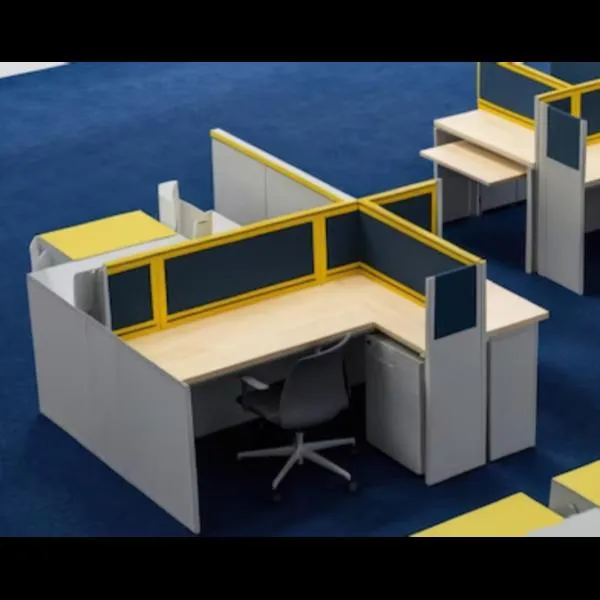
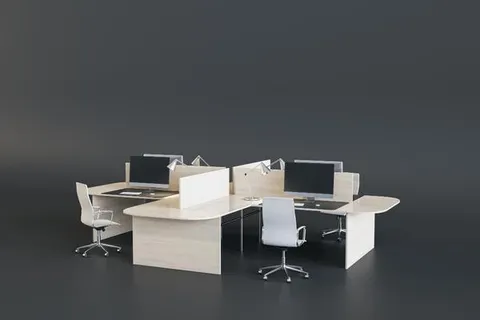
A T-type workstation puts a spine down the middle and desks off either side of it. Most descriptions stop at the seating benefit — three people, defined desks, easy conversation. The more useful thing to understand about a T is that the spine is a services duct, and that changes how you wire an office.
One drop feeds the cluster
In a conventionally wired office, every desk needs its own connection back to a floor box or wall point. That means a floor box per seat or extension leads snaking across the carpet, and it means that moving a desk means an electrician.
A T-type cluster inverts this. The vertical of the T carries a raceway from the building’s supply point out to the cluster. Inside that raceway, power and data run the length of the spine, and outlets surface at each of the three desk positions. The building only has to deliver services to one point per cluster.
The consequences are worth spelling out:
- Fewer floor boxes. A leased floor with a fixed floor box grid stops dictating your desk positions.
- Moves stop being electrical work. Reconfiguring within the cluster is a furniture job.
- Cable count on the floor drops to one bundle per cluster rather than one per seat.
- Fault-finding gets simpler, because the run is enclosed and labelled rather than improvised.
Specifying the spine properly
Three things determine whether the spine actually works:
Separation. Power and data cables sharing an undivided duct will produce interference on unshielded cabling. The raceway should have a physical divider, with power on one side and data on the other.
Capacity. A spine sized exactly for today’s outlet count leaves no room for the additional monitor, the desk lamp, and the second network drop that will appear. We size raceways with spare cross-section as a matter of course.
Access. The raceway lid needs to be removable along its whole length without dismantling the worksurface. If servicing the cable run requires lifting a desk, it will not be serviced.
Where the T shape earns its place
The Bannerghatta Road corridor carries a wide mix of tenants — technology firms, diagnostics and healthcare businesses, education providers and creative studios — and many of them work in teams of three to six with high internal communication. A T-cluster of three suits that team size almost exactly: each person has a defined desk, but a question can be asked without anyone standing up.
The pattern also scales cleanly. Two Ts placed back to back give six seats sharing one services run. Four give twelve. The floor stays legible, and every cluster looks the same, which matters more than it sounds when you are trying to keep an office looking deliberate rather than accumulated.
What we control at the workshop
We build the spine, worksurfaces and understructure together at Bommanahalli, which means the raceway, the grommet positions and the desk cut-outs are all set from the same drawing. Clusters bought as separate parts rarely line up this way.
Send us a floor plan
Tell us your headcount, your team structure, and where the building brings power onto the floor. Call +91 98807 93666 or email info@srirangainterior.com and we will lay the clusters out against it.