Banashankari
L-Type Workstations in Banashankari: Getting the Return Right
Return length, corner geometry and reach zones for L-type workstations in Banashankari offices. Built to measure at our Bengaluru workshop.
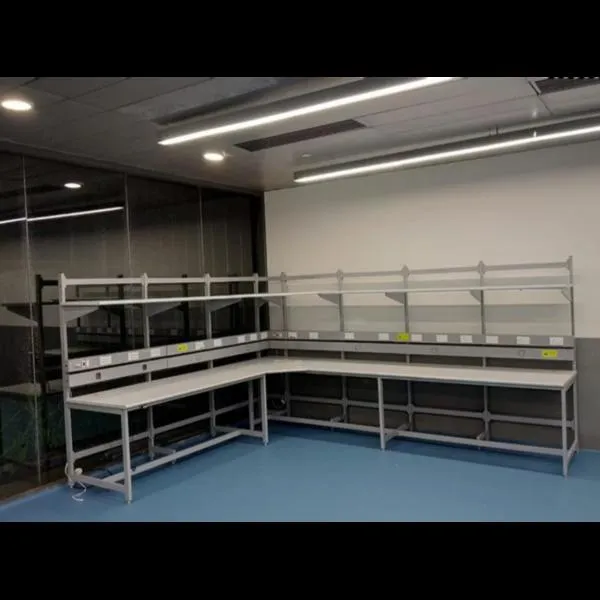
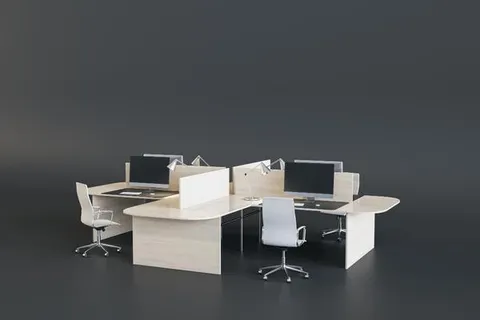
An L-type workstation is a main desk with a return running off it at ninety degrees. That description sounds trivial, but almost every complaint we hear about L-desks traces back to two numbers: how long the return is, and which side it sits on. Get those wrong and you have bought a desk with a corner nobody can reach and a return that blocks the chair.
The corner is the problem
The inside corner of an L is the furthest point from the seated user. Sitting square to the main desk, the far corner sits roughly 900–1100 mm away diagonally — beyond comfortable reach without leaning. This has a practical consequence: the corner is where clutter accumulates, because things placed there are hard enough to retrieve that nobody bothers.
There are two sensible responses. Either treat the corner as deliberate monitor territory — a monitor sitting in the corner puts the screen at a natural viewing distance and frees both wings for work — or specify a radiused or clipped corner that pulls the far point back toward the user. A clipped corner loses very little usable surface and makes the desk feel considerably less bulky in a small cabin.
Return length by what the person does
| Return length | Suits |
|---|---|
| 600 mm | A shelf, really. Printer or phone only |
| 900 mm | Laptop parked alongside, occasional paperwork |
| 1050–1200 mm | Genuine second work zone; documents spread out |
| 1350 mm+ | Pull-up seating for one visitor at the return |
If the intention is that someone can sit alongside — a colleague reviewing work, a customer signing paperwork — the return needs to be at least 1200 mm and the understructure needs clear knee space, not a modesty panel dropped to the floor.
Handing: left or right
Return handing is set by two things and they sometimes conflict. The first is the user — a right-handed person writing frequently is usually better with the return on the left, keeping the dominant side clear. The second is the room. In a cabin, the return should never sit between the door and the desk, because it forces visitors to walk around the furniture. The room usually wins, and that is fine, as long as it is a decision rather than an accident.
Why the shape suits Banashankari’s building stock
A lot of commercial space in and around Banashankari sits in buildings that were not originally planned as open-plan offices — floors with recesses, projecting columns, and rooms of irregular proportion. L-type workstations are genuinely useful here because they occupy a corner that a straight desk would waste. Two L-desks placed back to back in a room corner yield two full seats in floor area where a linear layout would fit one and a half.
What we build in
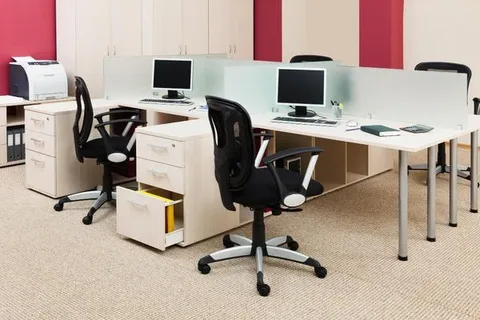
Storage under an L is best split: a mobile pedestal under the main desk where the user’s hand naturally drops, and either open shelving or a fixed unit under the return. Cable routing runs along the rear of both wings and drops at the corner, which keeps the visible cable count to one bundle.
Ask for a drawing before you order
We manufacture L-type workstations to measured sizes at our Bommanahalli workshop and will mark up your floor plan with handing and return lengths before anything is cut. Call +91 98807 93666 or email info@srirangainterior.com.