Kanakapura Road
Single Side Workstations on Kanakapura Road: Desk Ergonomics That Matter
Desk height, knee clearance, viewing distance and reach zones for single side workstations. The dimensions that decide comfort over a working day.
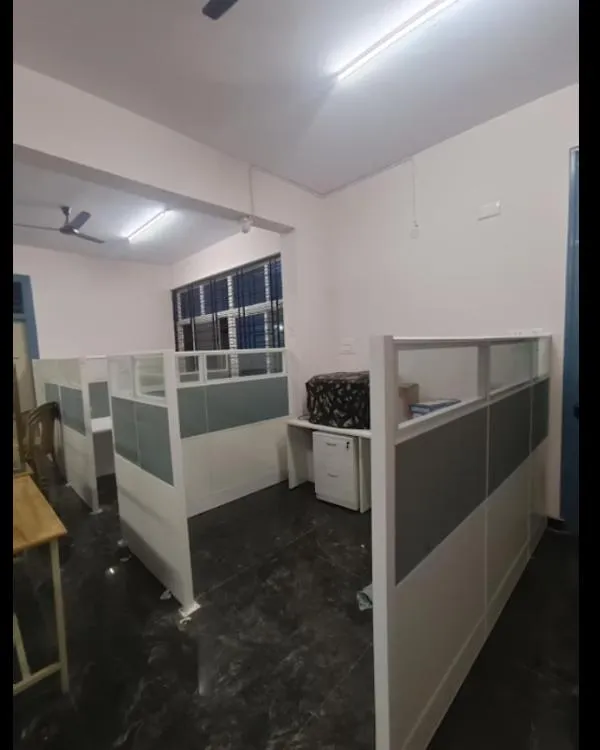
Workstation ergonomics is usually discussed as a chair question. The chair matters, but the desk sets the boundaries the chair has to work within — and a chair, however good, cannot compensate for a desk at the wrong height or a knee space that is obstructed.
Single side workstations, being simple linear desks, are where these dimensions are easiest to get right and most often ignored.
Desk height and the neutral posture
The target posture is: feet flat on the floor or a footrest, thighs roughly horizontal, elbows at about 90 degrees with forearms parallel to the floor when the hands are on the keyboard, and shoulders relaxed rather than raised.
The desk height that achieves this equals seated elbow height. For adults, seated elbow height varies roughly from 580 mm to 720 mm above the floor. A single fixed desk height cannot suit that whole range.
The market default of 750 mm suits the upper part of it. That is why shorter users at standard desks sit with raised shoulders — a posture that produces neck and shoulder discomfort over months, not days.
Practical responses, in order of effectiveness:
- Height-adjustable desks where the budget allows
- A lower fixed height of 725 mm, which suits more people than 750 mm
- Chair raised to the correct elbow height, plus a footrest — this works, and requires that footrests are actually provided rather than mentioned
The third option is the cheapest and is routinely skipped, which makes the whole exercise pointless.
Knee and leg clearance
Under the desk, the requirements are specific:
| Dimension | Minimum |
|---|---|
| Clear height at the front edge | 650 mm |
| Clear height at knee depth (~400 mm back) | 620 mm |
| Clear width | 600 mm (750 mm preferred) |
| Clear depth for feet | 600 mm |
The commonest violations are a cable tray hung too low under the front edge, a modesty panel set too far forward, and a fixed pedestal occupying the knee zone. Each converts a correctly sized desk into an uncomfortable one, and each is invisible in a photograph.
Viewing distance and monitor height
Distance: roughly 500–750 mm from eye to screen, scaling with screen size. This is what makes desk depth an ergonomic dimension rather than a capacity one — a 600 mm deep desk cannot deliver it for anything larger than a small monitor.
Height: the top of the screen at or slightly below eye level. A monitor on its own stand is usually too low for a tall user and about right for a short one — the opposite of what you would want.
Reach
Frequently used items — keyboard, mouse, phone, notepad — should sit within about 400 mm of the front edge, reachable with the forearm without extending the shoulder. Anything requiring a full arm extension several times an hour becomes a shoulder complaint.
Getting it right across a team
Individual assessment is not practical for fifty seats. What is practical:
- Set the desk height at 725 mm as standard
- Provide footrests as standard, not on request
- Specify 750 mm depth minimum
- Keep the knee zone clear — mobile pedestals, not fixed
- Provide monitor risers or arms so screen height can be set per person
That combination accommodates most of the population without individual assessment.
Kanakapura Road offices
Businesses along the Kanakapura Road corridor range from professional offices to operational and back-office functions where staff are at a desk for most of the working day. The longer the daily seated hours, the more these dimensions compound — small deviations that are unnoticeable in a two-hour sitting become the reason for persistent complaints over a year.
Specify the dimensions, not just the desk
We manufacture single side workstations to specified heights and depths at our own workshop in Bommanahalli. Call +91 98807 93666 or email info@srirangainterior.com.