JP Nagar
Office Workstation Manufacturer in JP Nagar — Managing Noise in Open Plan
Practical acoustic measures for open-plan offices in JP Nagar: screen heights and materials, layout distance, absorptive surfaces and what furniture can and cannot fix.
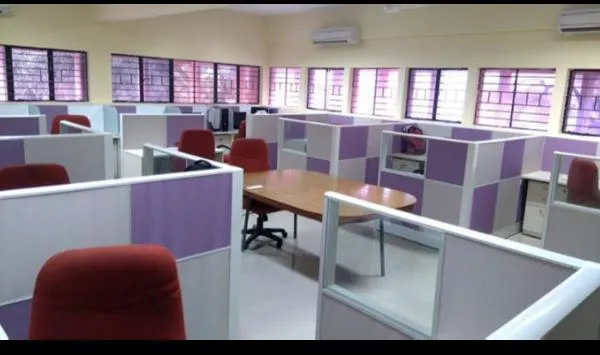
The most common complaint in open-plan offices is noise, and the most common response is to buy taller screens. Taller screens help less than people expect, because most of what furniture can do about noise is not blocking — it is absorption and distance.
Setting expectations honestly first: workstation furniture cannot soundproof anything. Sound travels over screens, around them, and reflects off hard ceilings and floors. What furniture can do is reduce the intelligibility of nearby speech, which is what actually breaks concentration. You are not trying to make the office quiet; you are trying to make neighbouring conversations unintelligible.
Distance does the most work
Sound pressure falls with distance. The simplest acoustic improvement in an office is to increase the separation between people, which usually means fewer seats — an expensive answer, but worth stating because it is the most effective one.
The cheaper version: separate the noisy from the quiet. Sales and support teams generate speech continuously; engineering and accounts need to concentrate. Putting them at opposite ends of the floor achieves more than any screen.
Screen height and what it does
| Height | Acoustic effect |
|---|---|
| 900-1050 mm | Essentially none. Visual only. |
| 1200 mm | Slight reduction between seated neighbours. |
| 1350-1500 mm | Noticeable for adjacent seated conversation. |
| 1800 mm+ | Meaningful, but the space becomes a maze. |
| To ceiling | The only real barrier, and no longer a screen. |
The useful range for open plan is 1200-1500 mm. Above that, you lose light, sightlines and the point of open plan; below it, you gain nothing acoustically.
The screen surface matters more than its height
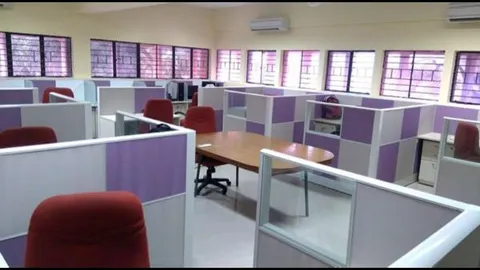
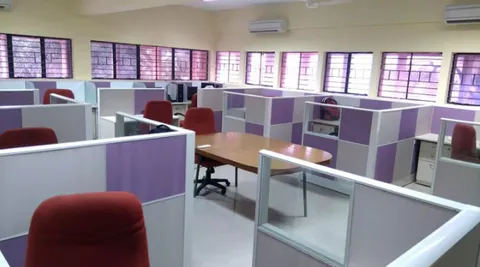
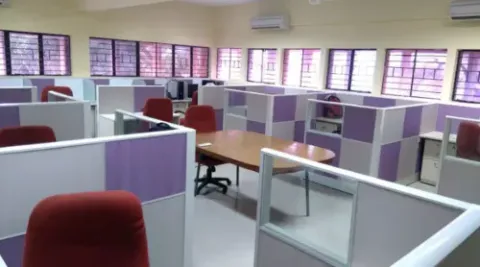
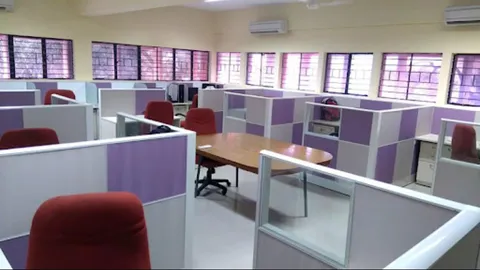
A hard laminate screen reflects sound. A fabric-wrapped acoustic screen — fabric over a soft core rather than over board — absorbs a portion of it.
This is a genuine, low-cost upgrade. Specifying fabric-wrapped screens instead of laminate screens does more for the room than adding 150 mm of height, and it gives you a pinnable surface at each desk as a bonus.
Absorption elsewhere
The furniture is only one surface among many. In a room with a hard floor, a plaster ceiling and glass walls, absorptive screens will be overwhelmed. The high-value additions:
- Acoustic ceiling tiles — the single largest absorptive surface available in any office
- Carpet or carpet tiles in open-plan zones
- Upholstered chairs rather than hard-shell seating
- Fabric-faced storage tops or soft materials along walls
None of these are furniture decisions strictly, but they are what determines whether the furniture decisions are visible.
Give people somewhere else to talk
The most effective single intervention in most JP Nagar offices we work with is not a screen. It is providing two or three small enclosed spaces — a two-person call booth, a four-person huddle room — so that phone calls and quick discussions leave the open floor.
Without those, every conversation happens at a desk by default. With them, the open floor gets noticeably quieter and no screen height change was needed.
Specify it at the outset
Screen height, screen construction and layout separation all have to be decided before manufacture. We build workstation systems with laminate, fabric-wrapped and glazed screen options at our own workshop at #336/10, Hosur Road, Bommanahalli.
Call +91 98807 93666 or email info@srirangainterior.com to plan an office in JP Nagar.