Basavanagudi
Sharing Workstations in Basavanagudi: Cost Per Seat and Shared Structure
Why a shared-spine workstation seats more people for less structure, and where the savings stop. Sharing workstations for Basavanagudi offices.
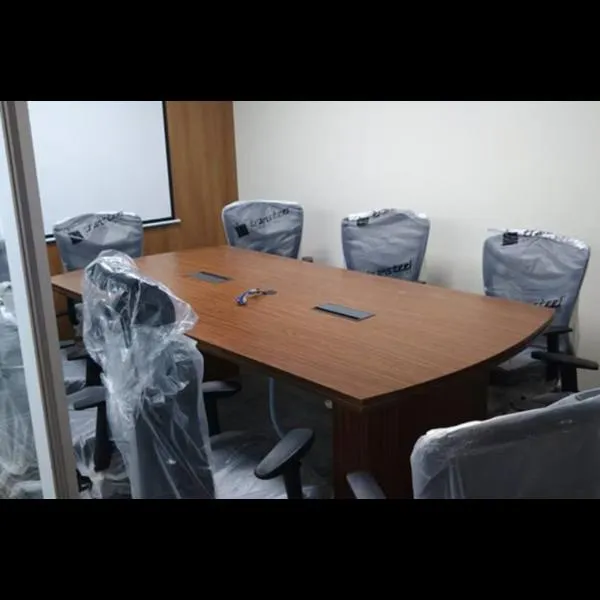
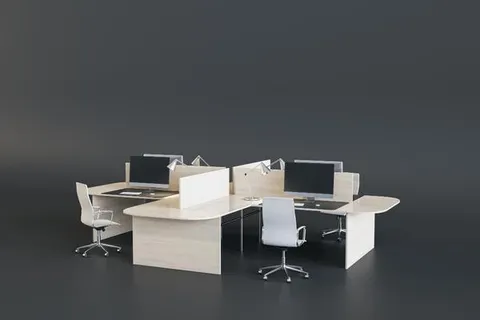
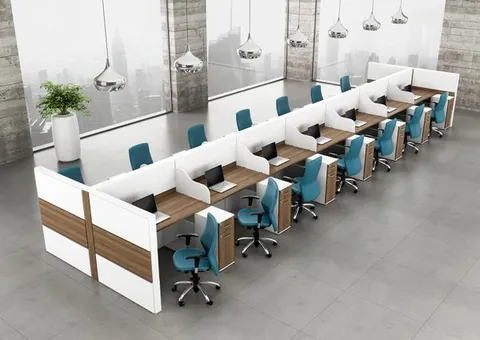
A sharing workstation seats people back to back or face to face across a common structure. The most honest reason it is popular is economic: two seats sharing one spine cost meaningfully less than two independent desks, and they occupy less depth. Understanding exactly where that saving comes from tells you when the layout is a good decision and when it is a false one.
Where the money is saved
An independent single-side desk needs its own legs, its own modesty panel, its own cable route and its own screen. Put two back to back and roughly half of that disappears:
- One shared understructure instead of two sets of legs
- One modesty panel serving both sides
- One cable raceway feeding both seats
- One screen dividing the pair rather than two separate screens
The depth saving is just as real. Two independent 750 mm desks placed back to back with a gap between them consume around 1600 mm of floor depth. A sharing unit at the same 750 mm per side is 1500 mm total with no gap, because the spine is the divider.
Extend that across four pairs in a row and the recovered depth is frequently enough for another circulation route, or a bank of storage against the wall.
Where the saving stops
Two things are shared that people often wish were not.
Movement transfers. A single continuous worktop across a pair means someone leaning on their side is felt on the other. If the work involves heavy keyboard use or writing pressure, specify a spine construction that separates the two worktops structurally rather than running one continuous board across.
Services are shared. One raceway for two seats is efficient until one person needs four outlets. Plan outlet counts per seat, not per pair.
Face to face or back to back
These are different products with the same name, and the choice should follow the work.
Back to back gives each person a screen at their back and no eye contact. It suits concentrated individual work and keeps monitors private from the person opposite.
Face to face across a low or glazed screen suits teams that talk constantly — support desks, editorial teams, paired technical work. It is a worse layout for anyone who needs to think without interruption, and no screen height fixes that entirely.
The screen decision
The divider between the pair is the piece that gets under-specified. A 350 mm screen above desk level does very little except stop paperwork migrating. A 450–550 mm screen blocks seated eye contact. Above that you are into panel territory and should be pricing a panel-based system instead.
Fabric-faced screens absorb some sound and take pins; glazed screens preserve light on a deep floorplate; laminate screens survive being wiped down. Most floors want fabric in the working core and glass where daylight has to travel.
Fitting Basavanagudi offices
Commercial floors around Basavanagudi tend to be moderately sized, often in older buildings with generous ceiling heights but modest plate depths. Sharing workstations are a good fit for exactly that shape — they let a narrow plate hold two working rows where independent desks would only hold one and a half, without the layout becoming claustrophobic.
Get a per-seat number
Tell us headcount, work type and plate dimensions and we will come back with a layout and a per-seat comparison against independent desks. Call +91 98807 93666 or write to info@srirangainterior.com. Everything is built at our own Bommanahalli workshop.