Hebbal
Open Desk T-Type Workstations in Hebbal: Materials, Boards and Finishes
Board core, laminate grade, edge banding and frame coating decide how a workstation ages. A materials guide for Hebbal offices buying T-type open desks.
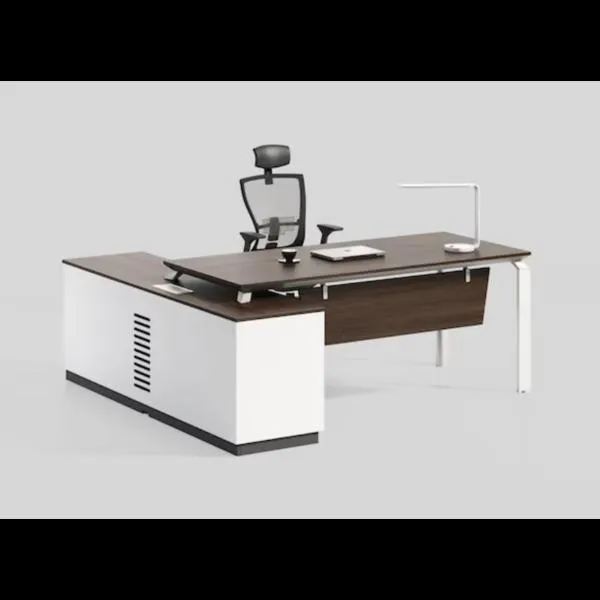
Two open desk T-type workstations can look identical on delivery day and be visibly different products two years later. The difference is almost never the design. It is the board underneath the laminate, the way the edge is bonded, and how the steelwork was finished. Since none of that is visible when you inspect a sample, it is worth knowing what to ask.
The board core
The worktop core carries the load and holds the fixings. Three options are common:
Pre-laminated particleboard. Economical, dimensionally stable, and adequate for light-duty desks. Its weakness is screw retention — fixings driven directly into the core loosen with repeated assembly, and it degrades badly if water gets past a damaged edge.
MDF. Denser, machines to a clean profile, and takes a post-formed edge well. Heavier, and also vulnerable to moisture at exposed edges.
Plywood / BWP-grade board. The best screw retention and the best moisture tolerance of the three. Meaningfully more expensive, and the sensible choice where a surface will see spills, or where a unit will be dismantled and rebuilt repeatedly.
For most office worktops the honest answer is a good-quality board with proper edge sealing rather than the most expensive core with a poor edge. Water almost always gets in at the edge, not through the face.
Laminate grade and why it matters at desk height
Decorative laminate is specified by thickness and by wear rating. A 0.7–0.8 mm laminate is standard for vertical surfaces; a horizontal worktop that will take keyboard abrasion, bag drag and chair-arm knocks should be at least 1 mm. Matt and textured finishes hide fingerprints and scratches far better than high gloss, which is why gloss belongs on a reception front panel and rarely on a working desk.
Edge banding is where furniture dies
This is the single most predictive detail. The options, in order of durability:
- Iron-on paper or thin PVC — cheap, lifts within a year at corners
- 2 mm PVC, hot-melt glued — the common commercial standard, adequate
- 2 mm PVC, PUR-glued — same appearance, dramatically better moisture and heat resistance at the glue line
- Machined solid or post-formed edge — no glue line to fail at all
If you are choosing one upgrade on the whole specification, make it the edge band. A lifted edge makes an otherwise sound desk look derelict.
The steel understructure
A T-type workstation puts its load into a central spine, so the steel is doing real work. Ask about section thickness, weld quality at the joints, and — critically — the coating. Powder coating over a properly cleaned and pre-treated surface resists chipping and corrosion. Powder applied over inadequately prepared steel flakes at the edges within a couple of years. You cannot see the difference on day one.
A note on Hebbal
Offices around Hebbal and the Outer Ring Road stretch toward the airport occupy a wide range of buildings, many of them newer plates with large glazed facades. That means high daylight levels, and high daylight is unforgiving of poor finish consistency — laminate batch variation and uneven sheen that would be invisible under downlights become obvious near a window wall. Where a floor is heavily glazed, matching finish batch across a whole order matters more than usual, which is easier to guarantee when the units are all made in one workshop run.
Ask for the specification in writing
We manufacture at our own Bommanahalli workshop and will state board, laminate, edge band and coating on the quotation. Call +91 98807 93666 or email info@srirangainterior.com.