Bengaluru
Commercial vs Home Furniture: A Bengaluru Maker's Guide
Commercial furniture and home furniture are built to different requirements. A Bengaluru manufacturer's guide to loading, finishes, hardware and service life for each.
People sometimes ask why an office desk costs what it does compared to a similar-looking table for the home. The answer is that they are built to different requirements, and the differences are mostly invisible.
Understanding them helps in both directions — it explains why commercial furniture is specified as it is, and it stops you over-buying for a home.
Use intensity
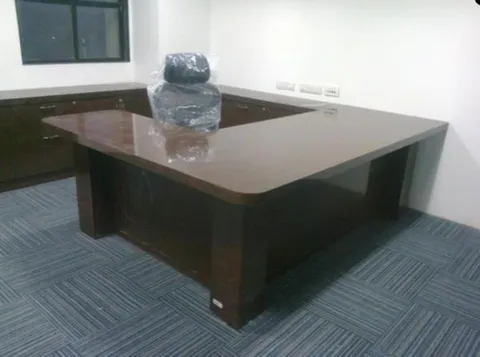
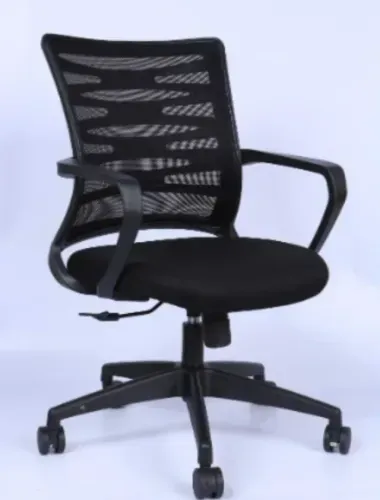
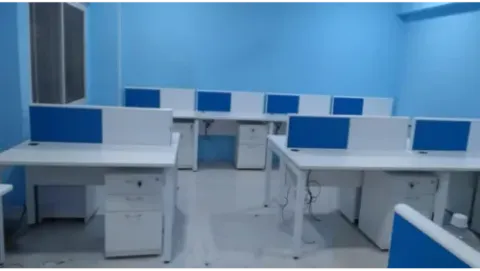
Commercial: a workstation is used eight hours a day, five days a week, by a person who did not pay for it. A storage shutter is opened several times daily. A chair is adjusted by a different person each time someone changes desks.
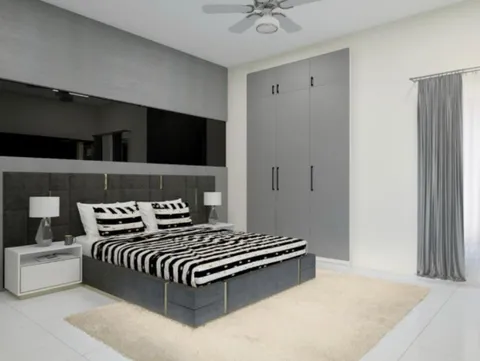
Home: a wardrobe shutter is opened twice a day. A study table is used a few hours a week.
This single difference drives most of the others.
Hardware
Commercial hardware is specified by cycle count and load rating: hinges rated for tens of thousands of cycles, drawer slides with a stated kilogram rating, gas lifts with a certified class.
Home hardware can be specified for appearance and feel. Soft-close everything is worth it in a home because you experience it daily; cycle ratings matter far less.
Structural loading
Commercial worksurfaces carry monitors, docking stations and people leaning on the edge. A 25 mm top with a properly sized frame is not over-engineering — an 18 mm top on light supports visibly deflects.
Home surfaces carry considerably less. An 18 mm shelf is fine at a 600 mm span in a wardrobe and would sag in an office storage run.
Finishes
Commercial finishes are chosen to hide wear: matt, mid-tone, lightly textured. The furniture will be knocked, scuffed and wiped by many people, and nobody will be careful with it.
Home finishes can be chosen for how they look, because the users are careful and the traffic is a fraction of an office. Gloss acrylic in a home kitchen is reasonable; gloss on an office worksurface is not.
Moisture exposure
Commercial exposure is limited to pantries and the occasional spilled cup. Most office furniture lives in dry, air-conditioned space.
Home exposure is much higher — kitchens, utility areas, bathrooms. This is why plywood carcasses matter more in a home than in an office, which is counterintuitive to most people.
Serviceability
Commercial furniture must be repairable in place, because replacing a desk means disrupting a working floor. Standard components, recorded laminate codes and available spares are essential.
Home furniture is repaired rarely and can be lived with. But because home furniture is bought once and kept for fifteen years, laminate codes matter here too — arguably more.
Reconfiguration
Commercial furniture must move. Teams grow, offices relocate, layouts change. Modular construction with reversible fixings is the norm.
Home furniture largely stays where it is put, so built-in and fitted construction is acceptable — provided you own the property.
What this means when you buy
- Do not buy commercial-grade construction for a home study table. You are paying for cycle life you will never consume.
- Do not buy home-grade construction for an office. You will consume its life in eighteen months.
- Do use commercial thinking in a home kitchen, which is the one domestic space with commercial-level use intensity.
We manufacture both at our own workshop at #336/10, Hosur Road, near ICICI Bank, Bommanahalli, Bengaluru 560068 — office furniture, workstations, seating, storage, reception and meeting furniture, ESD and laboratory workstations, and modular furniture, kitchens and wardrobes for homes.
Call +91 98807 93666 or email info@srirangainterior.com.