Indiranagar
Office Chairs in Indiranagar: Matching the Chair to the Duty Cycle
Executive, task, visitor and stool seating compared by hours of daily use, mechanism and adjustment. How to choose office chairs for an Indiranagar workplace.
Office chairs are almost always bought by appearance and price, and almost always should be bought by duty cycle — how many hours a day the chair will be sat in, by how many different people. A chair that is excellent for two hours a day is a poor chair for eight, and a chair built for eight hours is wasted money in a visitor lounge.
Duty cycle categories
| Category | Daily use | Typical user |
|---|---|---|
| Task / operator | 6–9 hours | Desk-based staff, the bulk of any office |
| Executive | 4–7 hours | Managers, cabin occupants |
| Visitor / guest | Under 1 hour | Anyone waiting or attending |
| Meeting | 1–3 hours | Conference and discussion rooms |
| Stool / lab / high | Variable, often standing-adjacent | Lab, reception back-position, high tables |
| Canteen / pantry | Under 30 minutes | Break areas |
The largest expenditure should sit in the first row of that table, because that is where the hours are.
What matters in a task chair
For a chair someone occupies most of a working day, four adjustments do most of the work:
Seat height. Non-negotiable. Feet flat on the floor, thighs roughly horizontal. Gas lift range should cover the users you actually have.
Backrest support at the lumbar. The lower back needs support at its natural curve. Adjustable lumbar height is worth more than most other features, because people’s backs are at different heights.
Seat depth. A gap of two to three fingers between the seat front edge and the back of the knee. A seat too deep cuts off circulation; too shallow gives no thigh support. Sliding seat depth adjustment matters where one chair serves multiple users.
Recline with tension control. The back should move with the user, and the resistance should be adjustable to body weight. A synchro mechanism, where the seat tilts as the back reclines, holds the hip angle better than a simple back tilt.
Armrests are useful if adjustable in height and useful only then. Fixed armrests that hold the user too far from the desk are worse than no armrests.
Back type
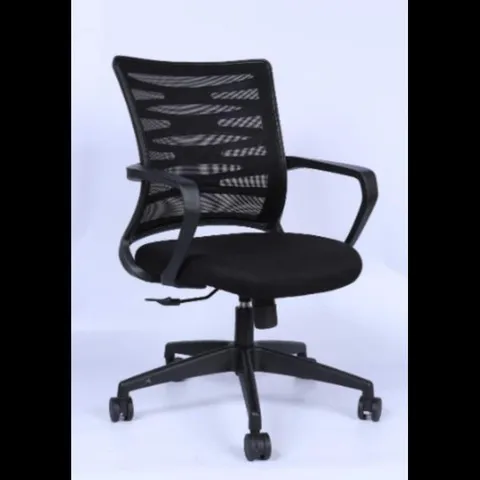
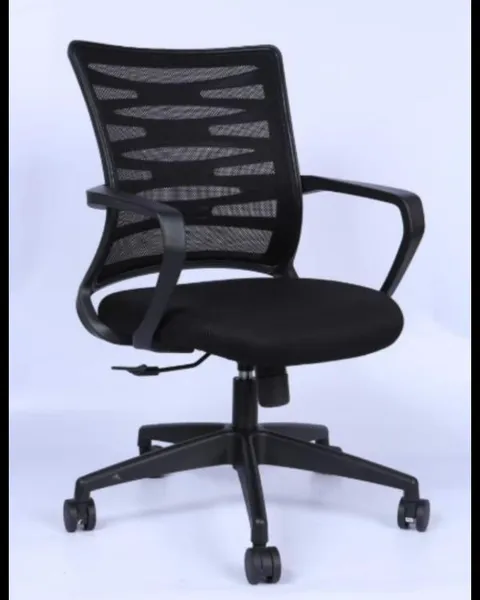
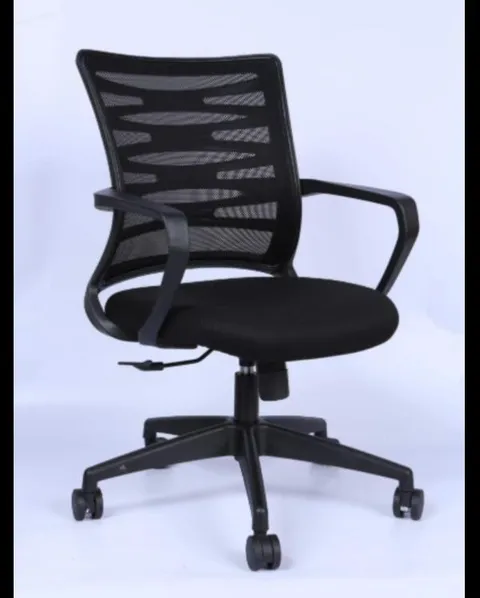
Mesh backs breathe, which matters in Bengaluru’s warmer months, and give visible lumbar shape. Mesh quality varies enormously — poor mesh sags within a year and then offers no support at all.
Upholstered backs are warmer, look more formal, and hold their shape longer if properly foamed. High-density moulded foam holds up; cut sheet foam compresses.
Where money is wasted
High-back executive chairs at operator desks. The headrest is unused because the user is leaning forward at a screen, and the extra cost bought nothing.
Task chairs in meeting rooms. Meetings last two hours; nobody adjusts the chair; the adjustment mechanism is paid for and never touched.
Cheap chairs on high duty cycles. A chair that fails or sags in eighteen months on a seat occupied eight hours a day costs more over five years than a better chair, and produces complaints throughout.
Buying for a mixed floor
Most offices need three or four chair types, not one. A sensible split: a good task chair for every desk, a simpler meeting chair for rooms, a stackable visitor chair for reception and overflow, and whatever suits the pantry. Trying to standardise on one model across all of these means over-buying for some positions and under-buying for others.
Indiranagar workplaces
Indiranagar’s office stock skews toward smaller, design-conscious workplaces in converted buildings — studios, agencies, professional practices. In spaces where the interior is part of the brand, chair appearance genuinely matters, but the practical advice stands: put the appearance budget into the chairs visitors see, and put the ergonomics budget into the chairs your team sits in.
Come and sit in them
Chairs cannot be chosen from photographs. Call +91 98807 93666 or email info@srirangainterior.com to arrange to try samples, or visit us at #336/10, Hosur Road, near ICICI Bank, Bommanahalli.