Bannerghatta
Chair Manufacturer in Bannerghatta — What Eight Hours in a Chair Requires
Why chairs that feel fine in a showroom fail over a full workday: pressure distribution, seat edge design, movement, and specifying seating for Bannerghatta offices.
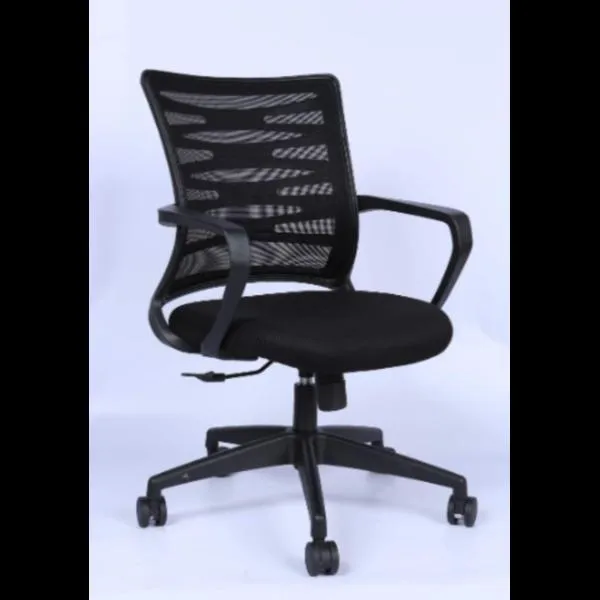
Every chair is comfortable for two minutes. That is the problem with buying seating from a showroom: the test you perform bears no relationship to the use.
Discomfort in an office chair almost never appears immediately. It appears at hour four, and it is caused by things that are imperceptible at minute two.
Pressure distribution, not softness
A soft chair feels better on sitting down and worse by the afternoon. Soft foam compresses fully under the sit bones and then offers no further support, so all the load concentrates in a small area. That concentration is what turns into ache.
What you want is firmer foam over a larger contact area — the load spread across the whole underside of the thigh and buttock rather than at two points.
Practical test: sit for fifteen minutes, then stand. If you can feel exactly where the seat was, pressure was concentrated. A well-distributed seat leaves no distinct impression.
Specification: moulded high-resilience foam, 40 kg/m³ or above. Not cut slab foam, which compresses permanently and creates the exact hollow that concentrates pressure.
The front edge of the seat
The single most under-considered part of a chair. A square or firm front edge presses into the back of the thigh, restricting circulation. Over hours this produces the numbness and leg fatigue that people usually blame on the backrest.
Specification: a waterfall front edge — the seat curving down and away — and a seat depth that leaves 50-70 mm between the seat edge and the back of the knee.
Movement matters more than posture
The research consensus on sitting has shifted. There is no single correct posture that can be held for eight hours; the healthy thing is to change position frequently.
That makes the recline mechanism the most important comfort feature in a chair, and it only works if it is set up.
- A synchro tilt at roughly 2:1 lets the back open up while the feet stay planted
- Tilt tension set to the user’s weight is what makes recline usable — set too hard, nobody reclines and the mechanism might as well not exist
- A free-float or unlocked tilt is better than a locked-upright chair for most desk work
The most common reason people sit rigidly upright all day is that the tension knob was never adjusted from the factory setting.
Backrest height and lumbar
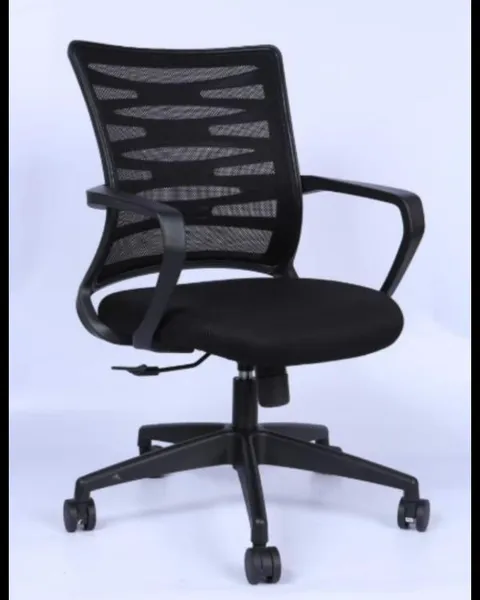
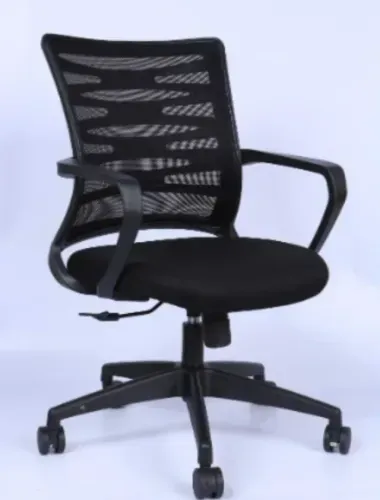
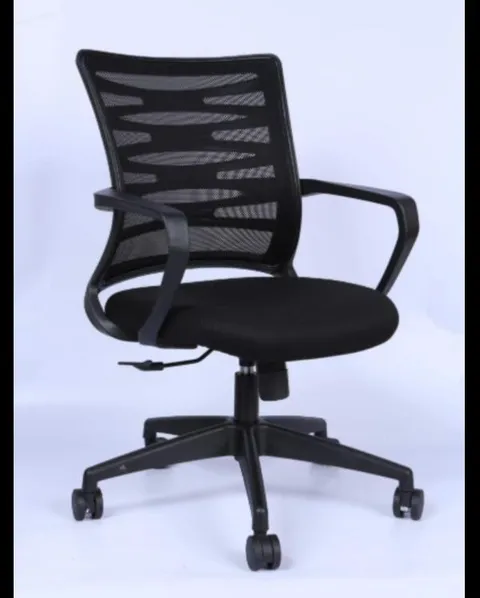
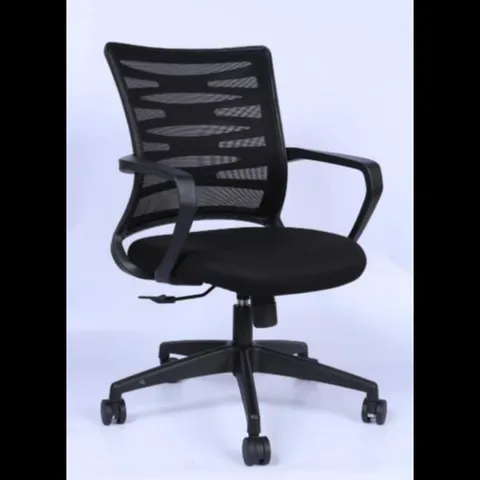
A mid-height back supporting the lumbar and lower thoracic region is sufficient for task work. A high back adds shoulder and head support that matters only when reclining significantly — useful in a cabin, largely unused at a workstation.
The lumbar support should be adjustable in height, because the position of the lumbar curve varies with torso length far more than people expect.
Armrests
Height-adjustable, set so the forearm rests with the shoulder relaxed. If arms are fixed too high, the shoulders are lifted all day, which produces neck and upper back pain that no amount of lumbar support will fix. If in doubt, a chair with no arms is better than a chair with badly positioned fixed arms.
Climate
Bengaluru is mild but warm for much of the year. A tensioned mesh back moves air across the spine and makes a genuine difference by afternoon. Leatherette does the opposite and belongs on chairs used for an hour at a time.
We supply and install office seating across Bannerghatta, working from our own workshop at #336/10, Hosur Road, Bommanahalli.
Call +91 98807 93666 or email info@srirangainterior.com.