Banashankari
Office Table Manufacturer in Banashankari — Understructures and Why They Matter
Table legs, cantilever frames, panel supports and pedestal bases compared for Banashankari offices — how the understructure decides stability, leg room and flexibility.
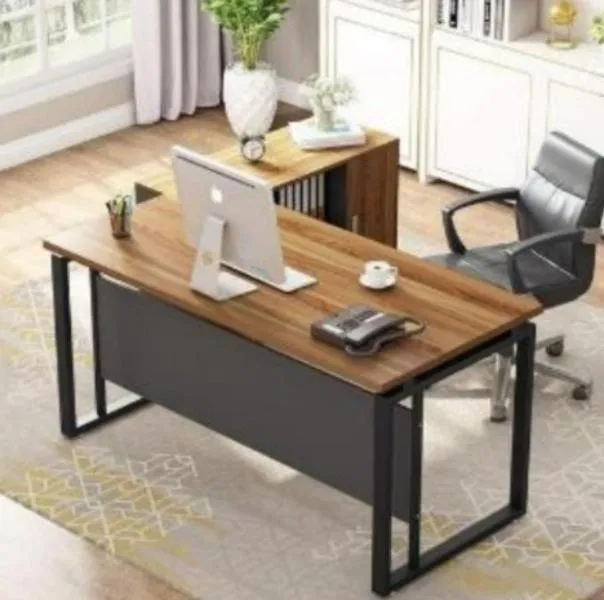
Everyone specifies the top of an office table — size, laminate, edge. Almost nobody specifies what holds it up, and yet the understructure determines stability, leg room, whether the table can be moved, and how the floor gets cleaned.
Here are the four common options and what each one is actually good for.
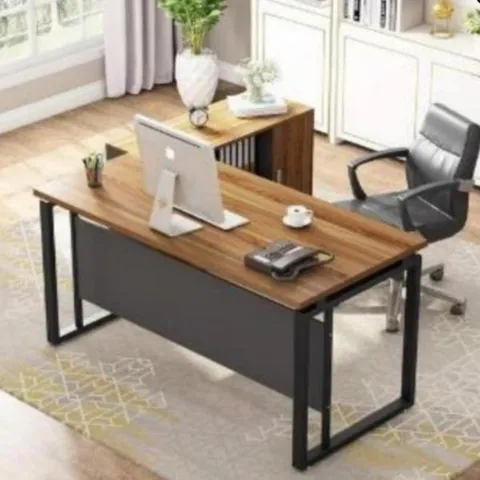
Four-leg frame
The default: a leg at each corner, usually MS box section, with rails between.
- Stability: excellent, provided the rails are sized properly. The weak version has thin rails and racks side to side when someone leans.
- Leg room: poor at the corners. Two of the four legs are exactly where a user’s knees want to go on a shared or facing arrangement.
- Best for: single-user desks against a wall, where corner legs are out of the way.
Cantilever / C-leg or T-leg frame
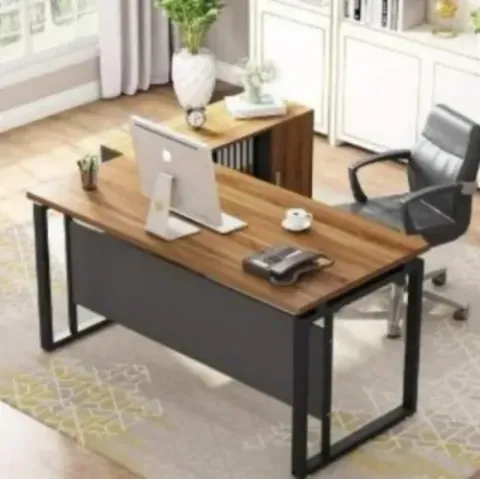
A flat foot with a single vertical rising at the outer end of each side, and a beam under the top.
- Stability: good, with a deep enough beam. The foot needs to project forward and back for balance.
- Leg room: excellent. The whole front of the knee zone is clear, and users can sit at the corner.
- Best for: open-plan desks, conference tables, anywhere seating position is not fixed.
This is the understructure most modern workstations use, and for good reason.
Panel-side support
The top sits on vertical board panels in the same finish, functioning as gable ends.
- Stability: very good — a full panel is stiff.
- Leg room: blocked at the sides entirely. Nobody sits at the end of the table.
- Best for: cabin desks, reception counters, and anywhere you want a solid visual base. Also the least expensive option, since it uses the same board as the top.
- Trade-off: the table cannot be reconfigured. The panel is the structure.
Central pedestal base
A single column on a weighted cross or disc base, mostly used on round and small square tables.
- Stability: good on tables up to about 1200 mm diameter; poor beyond that unless heavily weighted.
- Leg room: the best of all — the entire perimeter is clear.
- Best for: discussion tables, canteen tables, small round meeting tables.
Choosing between them
| Table type | Recommended understructure |
|---|---|
| Open-plan workstation | Cantilever or shared spine frame |
| Cabin / MD desk | Panel side + modesty panel |
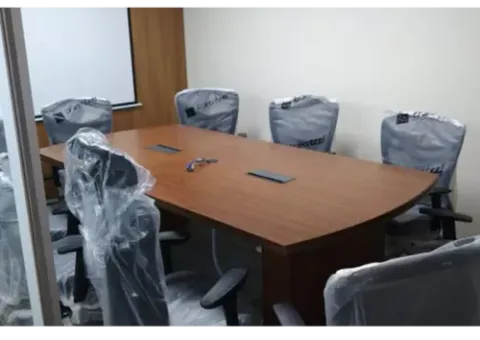
| Conference table | Twin cantilever or twin panel bases |
| Round discussion table | Central pedestal |
| Canteen table | Central pedestal or T-leg |
| Reception counter | Panel construction, built as a carcass |
Details that apply to all of them
Levellers on every contact point. Non-negotiable. Commercial floors in Banashankari’s older buildings are frequently out of level, and a table that rocks will be complained about every week.
Modesty panel wherever the table faces a walkway or a visitor. Board, perforated metal or fabric-faced — it changes how the table reads from the front and gives cable management something to hide behind.
Cable route down a leg or column. Whichever understructure you choose, decide where the cables go before it is made. A cantilever leg can carry an internal channel; a panel gable can be grooved. Retrofitting either means damaging a finished surface.
We manufacture office tables with all four understructure types at our own workshop at #336/10, Hosur Road, Bommanahalli.
Call +91 98807 93666 or email info@srirangainterior.com.