Bommanahalli
Furniture Manufacturer in Bommanahalli — How a Custom Order Actually Runs
The stages of a custom furniture order in Bommanahalli from first enquiry to handover — what you decide at each point, and what is expensive to change afterwards.
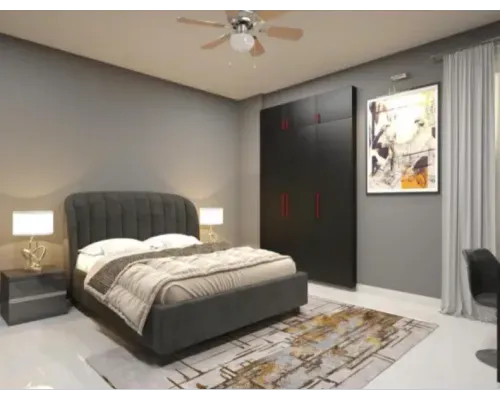
“Customised” gets used to mean anything from choosing a laminate colour to designing a unit from scratch. Worth being precise about, because the two involve very different processes and very different amounts of your time.
Here is how a genuinely custom order runs at our workshop at #336/10, Hosur Road, Bommanahalli, and where the decision points fall.
Stage 1 — Brief
What you tell us: what the space is for, how many people, what is being stored, what you want it to feel like, and the budget range.
What is useful to bring: photographs of the space, any existing floor plan, and examples of finishes you like. What is not useful: a fixed idea of unit dimensions before the space is measured, because it usually has to change.
Changeable later: everything. This stage costs nothing to revise.
Stage 2 — Site survey
We measure: wall lengths at three heights, diagonals for square, floor level across each run, ceiling height, and the position of every electrical point, plumbing line, window reveal and door swing. We also record the access route — door widths, stair headroom, lift internal dimensions.
Why the access route matters: it decides whether a 2400 mm counter is made in one piece or two. That is a design decision, not a delivery problem, and it has to be made now.
Stage 3 — Design and drawings
Each unit gets a fabrication drawing: overall size, internal divisions, board type and thickness, hardware model, edge treatment, laminate code, and any split lines.
You review this. It is worth reading properly — this is the last point at which changes are free.
Changeable later: yes, but each revision here is cheap and each revision after production begins is not.
Stage 4 — Finish approval
Physical samples, viewed in your actual space at the time of day it is most used. Not a printed catalogue, not a photograph.
Approve laminate codes for every element — carcass, shutter, edge band, and any accent.
Changeable later: no. Once boards are cut, the finish is fixed.
Stage 5 — Production
Boards cut on a panel saw, edges banded by machine, hardware drilled to a jig, units dry-assembled and checked.
Changeable later: structural changes at this point mean remaking units. This is the point at which the design is genuinely frozen.
Stage 6 — Delivery and installation
Units delivered, positioned, levelled, joined, scribe fillers cut to the actual wall profile, shutters hung and aligned, drawers fitted and adjusted, plinth scribed and fitted, protective film removed, site cleaned.
Stage 7 — Handover
A joint walk-through: every shutter opens and closes, drawers run to full extension, locks turn, no scuffs, edge banding intact, everything level and stable. Anything outstanding is listed and dated.
We also record the laminate codes, board specification and hardware models against your project, so a replacement part years later matches rather than approximates.
Where custom is worth it, and where it is not
Worth it: anything that has to fit a wall, a corner, a ceiling height or an alcove. Anything storing something specific. Anything in an older building where nothing is square.
Not worth it: freestanding loose furniture that fits anywhere — dining chairs, a standard sofa, a bedside table. Buy those.
To discuss a custom project in Bommanahalli, call +91 98807 93666 or email info@srirangainterior.com. You are also welcome to visit the workshop.