Kadugodi
Full Height Storage in Kadugodi: Calculating How Much You Actually Need
Work out filing capacity in running metres before buying cupboards. Full height office storage sizing, shelf pitch and load limits for Kadugodi offices.
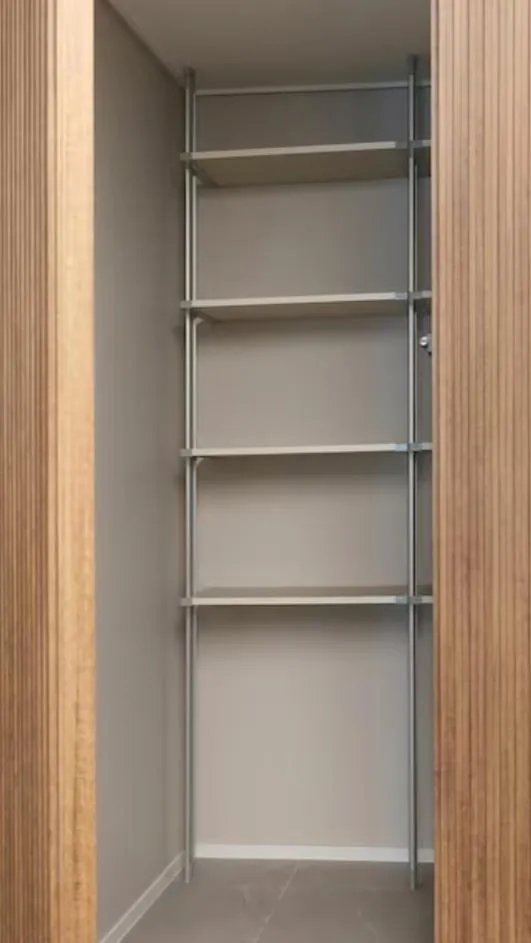
Full height storage is bought by guesswork more often than any other piece of office furniture. Somebody estimates “about six cupboards”, they arrive, and within a year the office has either three empty units taking up wall or files stacked on top of full ones. Both outcomes are avoidable with fifteen minutes of measurement.
Measure what you have in running metres
Filing capacity is measured in linear shelf length, not in cupboards. To size storage properly:
- Measure your existing files as they stand on shelves. Total the horizontal length occupied — that is your current running metres.
- Add retained archive currently in boxes, cartons or under desks.
- Add annual growth. Most offices add 10–20% per year unless they have an active destruction policy.
- Multiply by the number of years before the next fit-out. Five years is a reasonable planning horizon.
A unit 900 mm wide with four usable shelves gives 3.6 running metres. So an office holding 22 running metres today, growing 15% a year over five years, needs about 44 running metres — twelve to thirteen units, not six.
If that number horrifies you, the answer is a retention and destruction policy, not smaller cupboards. Buying insufficient storage does not reduce the volume of paper; it just distributes it around the office.
Shelf pitch by what you store
| Contents | Clear shelf height |
|---|---|
| Lever arch / box files upright | 320 mm |
| A4 ring binders upright | 300 mm |
| Flat stacked paper, catalogues | 250 mm |
| Archive boxes | 350–400 mm |
| Personal effects, bags | 400 mm+ |
Adjustable shelves on a close pitch — 32 mm increments — are worth specifying, because storage contents change and fixed shelves fossilise a decision made once.
Load, and why shelves sag
A metre of upright lever arch files weighs approximately 35–50 kg. That is a serious load on an 18 mm particleboard shelf spanning 900 mm, and it will bow within a year.
The options are a thicker shelf (25 mm), a shorter span (a central divider halving an 900 mm bay), or a stiffening rail at the rear edge. On any unit intended to hold dense filing, we specify at least one of these as standard. A visibly bowed shelf is the most common defect in office storage and it is entirely a specification decision.
The top of the unit
A 2100 mm high unit puts its top shelf out of reach for most people without steps. There are two honest positions: either accept the top shelf as low-frequency archive storage, or specify 1800 mm units so everything is reachable and use the extra wall for something else.
What you should not do is specify a 2400 mm unit and expect the top to be used. It will become dust and dead cartons.
Doors, locks and access
Hinged doors need swing space — allow 500 mm clear in front. Sliding doors need none but only ever expose half the unit at a time. Open shelving is fastest to use and looks chaotic unless the contents are uniform.
For anything under a retention obligation, specify locks and record who holds keys. Adding locks later means replacing doors.
Kadugodi and the Whitefield fringe
Offices around Kadugodi and the eastern technology belt often occupy floors where the lease is a known term. Where that is the case, freestanding full height units are preferable to built-in joinery: they move with you, they can be reconfigured, and they do not require making good at the end of a tenancy.
Bring us your file measurements
We manufacture full height storage to size at our Bommanahalli workshop, including shelf pitch and internal dividing set to your contents. Call +91 98807 93666 or email info@srirangainterior.com.